
If you’ve been anywhere near beauty TikTok lately, you’ve probably noticed a new trend: tourists in Seoul walking out of pharmacies with bags full of skincare. And there’s a good reason for it.

Korean pharmacy skincare has become one of the hottest beauty discoveries for international visitors — and it’s easy to see why. We’re talking about pharmaceutical-grade creams and ointments developed by major Korean drug companies, packed with active ingredients at concentrations you won’t typically find in regular cosmetics. The best part? Most of them are available over-the-counter, no prescription needed.
But here’s the thing — these products are OTC medications, not cosmetics. That’s exactly what makes them powerful, and exactly why you need to be smart about using them.
So we put together the ultimate Korean pharmacy skincare guide: the most-hyped pharmacy picks matched to your specific skin concern, plus a K-beauty cosmetic alternative for each one — same key ingredient family, gentler approach, easier to work into your daily routine.
Whether you’re building a pharmacy haul list for your next Seoul trip or just curious about what all the buzz is about, this one’s for you.
Before You Shop: The Golden Rules of Korean Pharmacy Skincare
Let’s get this out of the way first — because it’s important.
Those viral pharmacy products sitting in the pretty displays? A lot of them are classified as medications in Korea. That means they went through drug approval processes, contain pharmaceutical-grade actives, and come with actual usage guidelines. Understanding this distinction is key to getting the most out of Korean pharmacy skincare without running into trouble.
Here’s what to keep in mind:
- Talk to the pharmacist before you buy — seriously. Most pharmacies in popular tourist areas like Myeongdong, Hongdae, and Gangnam now have staff who speak English, Japanese, and Chinese. Tell them about your skin type, any allergies, and what you’re currently using. That two-minute conversation can save you from a bad reaction.
- Stick to the recommended usage. These aren’t “the more the better” products. Specific areas only, specific frequency, specific duration. Read the label (or have the pharmacist explain it).
- Some products are off-limits for pregnant or breastfeeding individuals, children, or people on certain medications. When in doubt, ask.
💁♀️ And perhaps most importantly: if your skin concern is mild, a cosmetic might be all you need. Korean pharmacy skincare products are for when regular skincare isn’t cutting it — not a replacement for your entire routine.
*Everything in this guide is for informational purposes only. We’re beauty editors, not doctors. Always consult a pharmacist or dermatologist before trying any OTC medication.
Concern #1: Breakouts & Acne That Won’t Quit
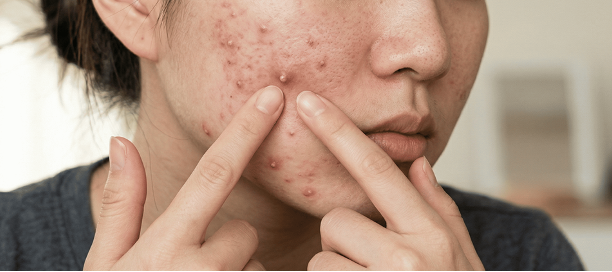
Stubborn breakouts are one of the most universal skin frustrations — and one of the top reasons tourists are seeking out Korean pharmacy skincare. Here’s the product leading the conversation.
💊 The Pharmacy Pick: Azelia Cream
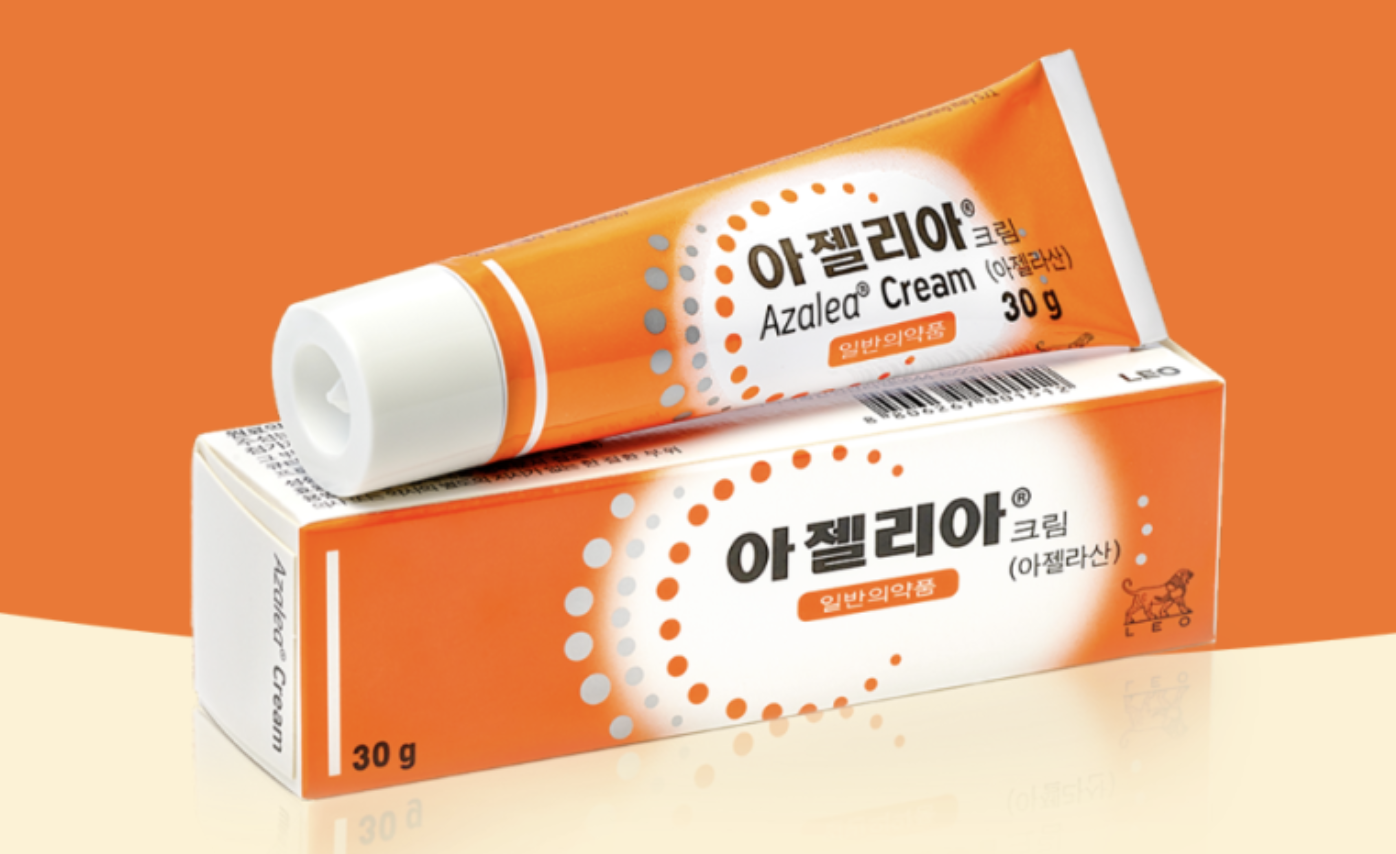
- Brand: LEO Pharma (the Danish pharmaceutical company behind Fucidin)
- Key Active: Azelaic Acid 20%
- What it does: Azelaic acid is a true multi-tasker — it suppresses acne-causing bacteria, normalizes abnormal keratin cell growth to prevent clogged pores, and reduces inflammation. A notable bonus: it also inhibits melanin production, meaning it can help fade post-acne dark marks as well. Visible improvement typically begins around the 4-week mark with consistent use.
- How to use: After cleansing, apply to affected areas twice daily (morning and evening). Massage in gently.
- Heads up: This is an OTC medication. Tingling or a mild burning sensation is common during the first few days and usually subsides with continued use. Avoid contact with eyes, nose, and mouth. Sunscreen is recommended during treatment as skin may become more sensitive.
🧴 Prefer a Cosmetic? Try These Instead
Azelaic acid at 20% is medication-grade, but its core benefits — exfoliation, oil control, brightening, and calming — can be approached through well-chosen cosmetic actives. Niacinamide in particular mirrors several of azelaic acid’s multi-functional properties (oil control, pore refinement, brightening), while AHA/BHA cover the exfoliation angle.
1. [COSRX] The Niacinamide 15 Serum

High-concentration niacinamide that tackles oil control, pore refinement, and gradual tone evening. Among cosmetic ingredients, niacinamide comes closest to matching azelaic acid’s multi-function profile.
2. [COSRX] AHA 7 Whitehead Power Liquid

A 7% glycolic acid (AHA) exfoliant that dissolves whiteheads, smooths rough texture, and promotes healthy skin turnover. Also contains niacinamide and panthenol, so it brightens and soothes while exfoliating — a solid multi-tasker that mirrors several of azelaic acid’s functions.
3. [SOME BY MI] AHA, BHA, PHA 30 DAYS MIRACLE SERUM

A triple-acid approach to acne management that covers exfoliation from multiple angles. Helpful for those dealing with both active breakouts and post-acne texture.
🧪 The Ingredient Take:
Azelia Cream’s real strength is that azelaic acid does multiple things simultaneously — antibacterial, exfoliant, anti-inflammatory, and brightening — all in one product at a 20% pharmaceutical concentration. In cosmetics, you’d typically need to combine several products (BHA for pores, niacinamide for oil and tone, a calming ingredient for redness) to cover a similar range. If your acne is persistent and you want a single focused solution, the pharmacy pick is worth exploring. For milder, maintenance-level care, a niacinamide serum paired with a gentle chemical exfoliant can cover a lot of the same ground.
Concern #2: Stubborn, Deep-Set Hyperpigmentation
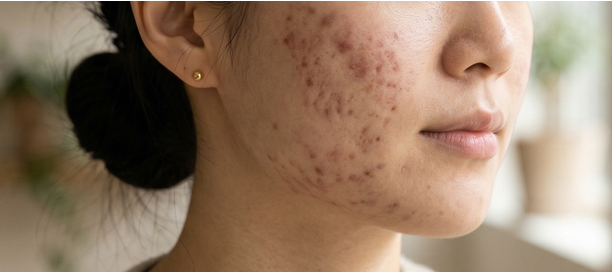
When dark marks from acne, sun damage, or hormonal changes have settled deep and won’t budge with regular cosmetics — that’s when many visitors turn to the stronger end of Korean pharmacy skincare. The products in this section use a higher concentration of the gold-standard depigmenting ingredient for cases that need more intensive care.
💊 The Pharmacy Pick: Melanosa Cream / Domina Cream
Two pharmacy staples dominate this category, both built on the same proven active ingredient at a higher concentration than typical brightening cosmetics.
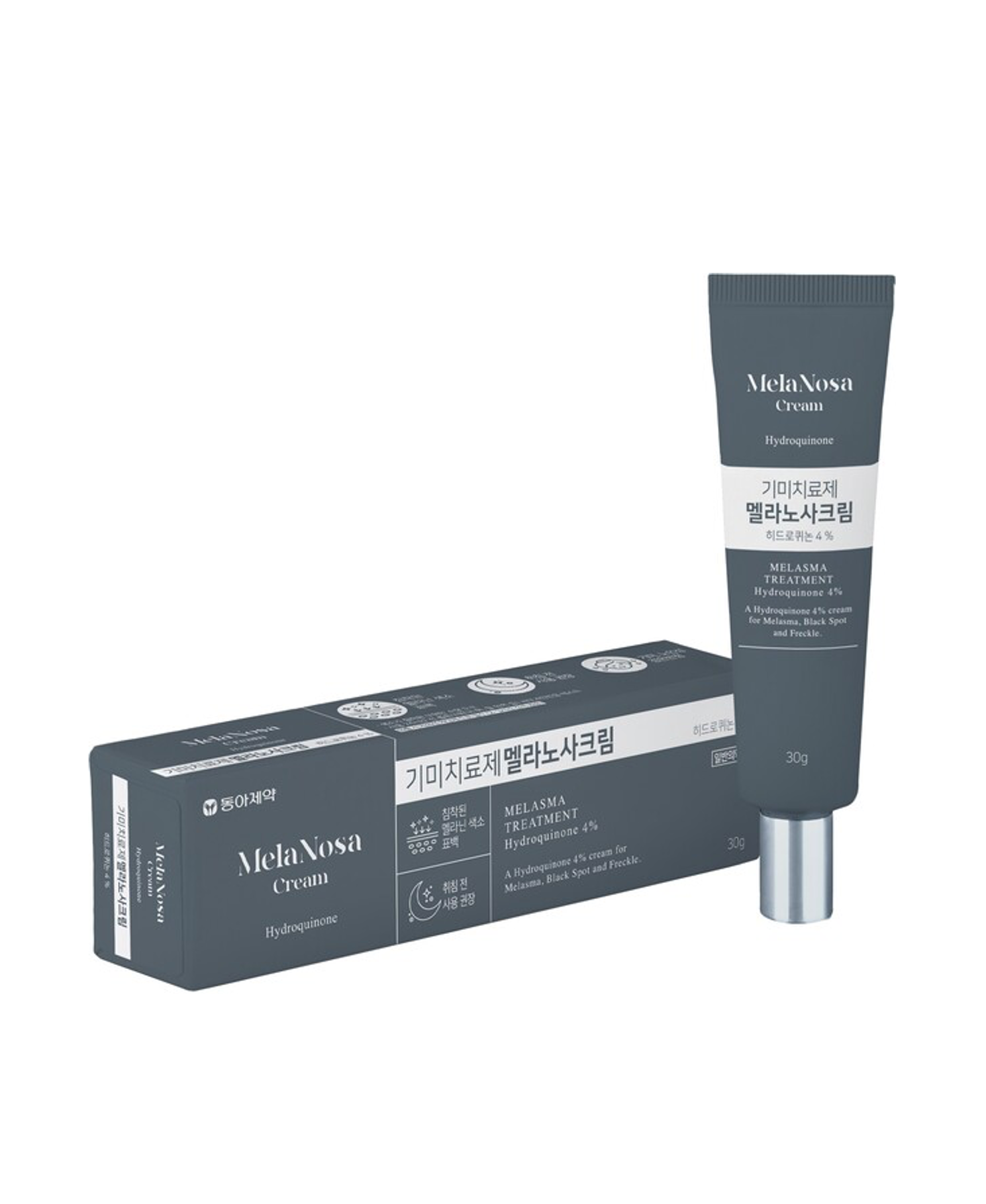
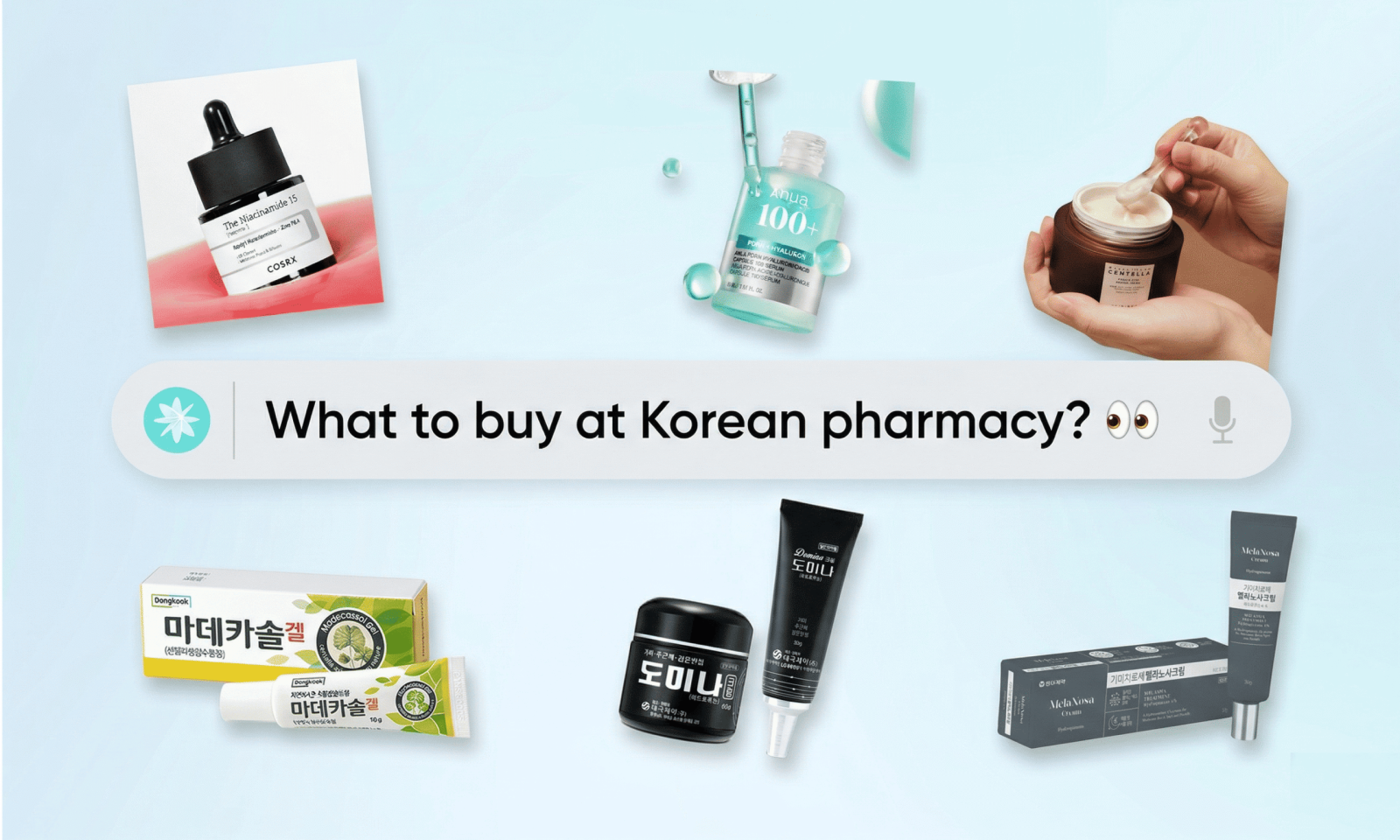
Melanosa Cream — by Dong-A Pharmaceutical. Contains hydroquinone 4%, which is double the concentration of its sibling product Melatoning Cream. Designed for deeper, more stubborn pigmentation.
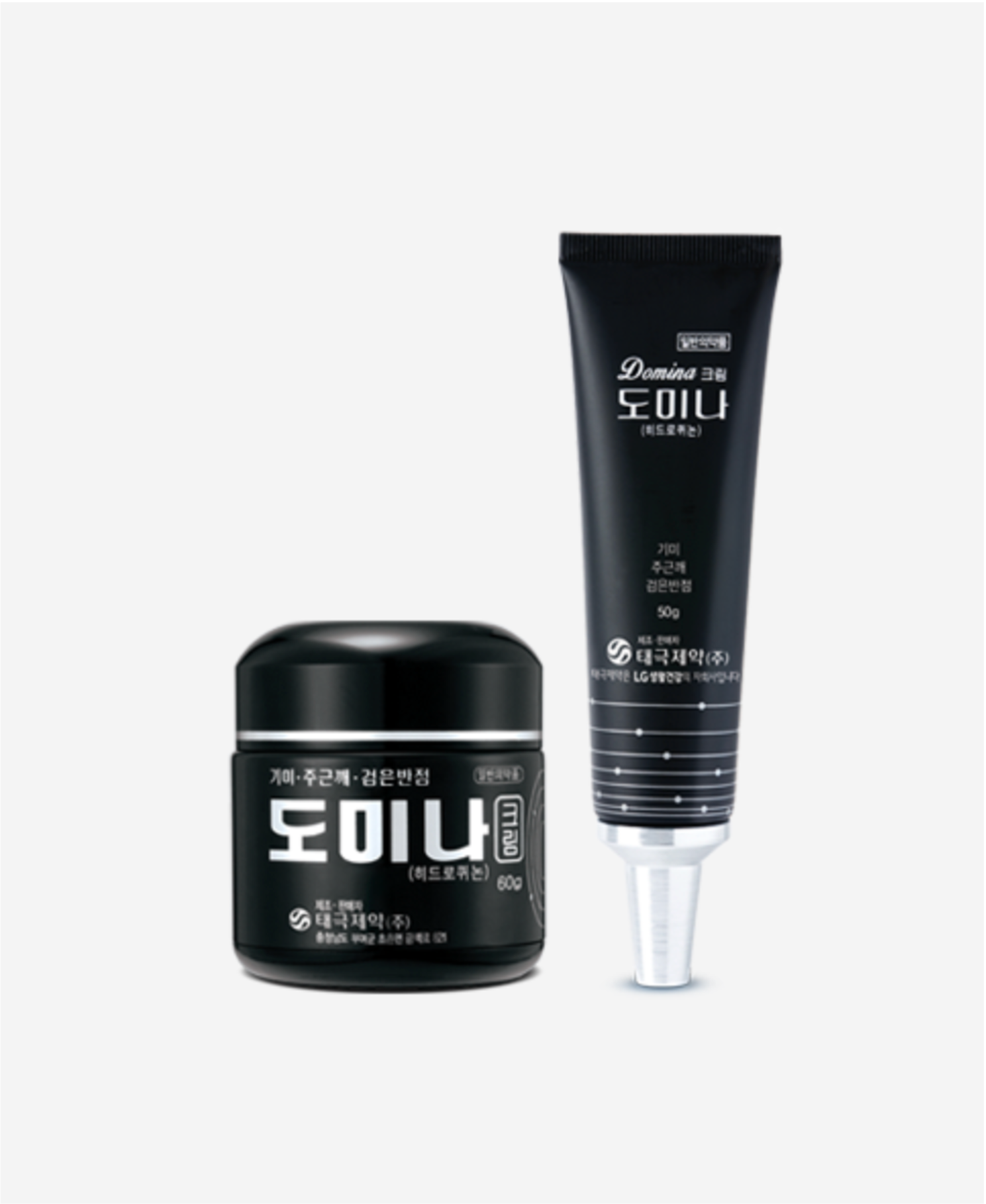
Domina Cream — by Taeguk Pharmaceutical. Also contains hydroquinone 4% and has held the #1 spot in Korea’s OTC melasma treatment market since 1996 — a true pharmacy classic since its original launch in 1985.
- Key Active: Hydroquinone 4%
- What it does: Hydroquinone inhibits tyrosinase, the enzyme responsible for melanin production, while also gradually fading pigment that has already settled. At 4%, these products deliver a stronger depigmenting effect than 2% formulas, making them a go-to for concentrated, localized post-acne dark marks.
- How to use: Apply a small amount to pigmented areas only, at night after cleansing and basic skincare. Use a cotton swab or fingertip to dab — do NOT spread across the entire face.
- Heads up: Sunscreen during the day is absolutely non-negotiable. Even brief sun exposure can worsen pigmentation while using hydroquinone. Not for use during pregnancy. Do not use continuously for extended periods without pharmacist guidance — long-term use can cause adverse effects. Patch test behind the ear for 24 hours before first use.
🧴 Prefer a Cosmetic? Try These Instead
Hydroquinone at 4% is squarely in medication territory. But for post-acne marks that are lighter or more recent, K-beauty cosmetics offer effective daily-use alternatives through ingredients like vitamin C, niacinamide, and tranexamic acid — which work by suppressing melanin production or blocking its transfer to the skin’s surface.
1. [Klairs] Freshly Juiced Vitamin Drop

A beginner-friendly 5% vitamin C serum. If your skin is sensitive and you want to ease into brightening actives, this is a solid starting point.
2.[SOME BY MI] Galactomyces Pure Vitamin C Glow Serum
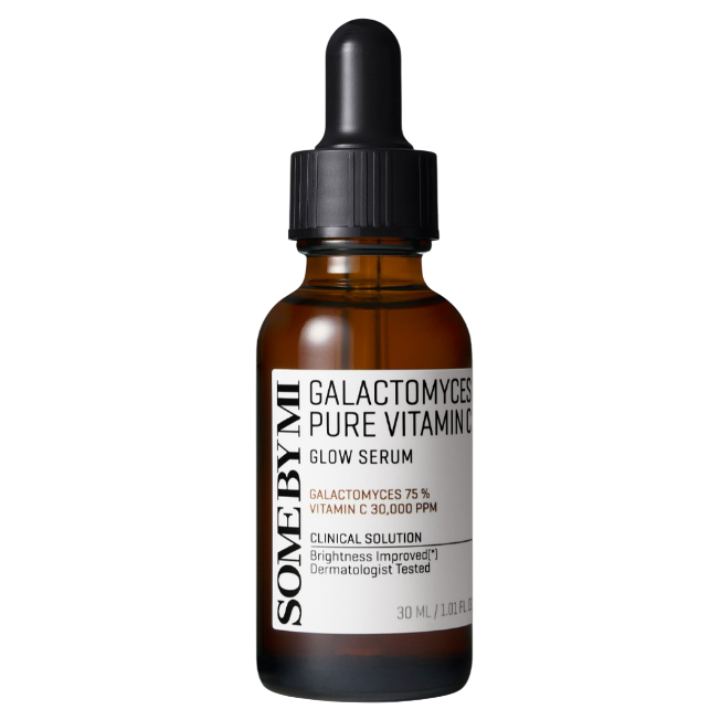
Galactomyces ferment + vitamin C for brightening and overall skin radiance. Lighter texture, good for layering.
3. [COSRX] Advanced The Vitamin C 23 Serum
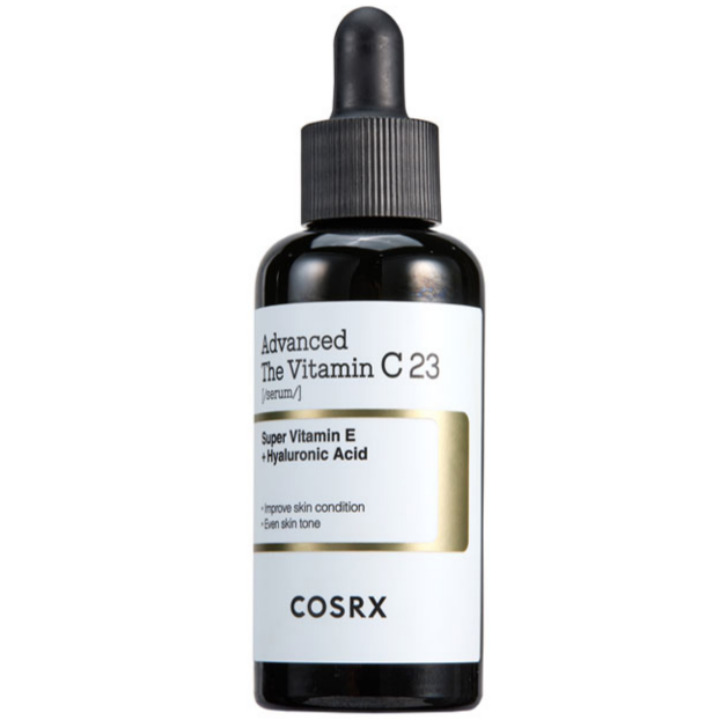
A high-concentration pure vitamin C serum that targets dark spots with antioxidant power. Works best when layered under sunscreen in the morning.
🧪 The Ingredient Take:
Melanosa Cream and Domina Cream deliver hydroquinone at 4% — double the strength of milder OTC options. That makes them effective for focused, stubborn post-acne dark marks, but also means the usage rules are strict. For marks that are relatively fresh or not deeply set, a vitamin C serum used consistently with daily sunscreen can deliver meaningful results without the medication-level precautions.
Concern #3: Lighter Pigmentation, Freckles & Early-Stage Dark Spots
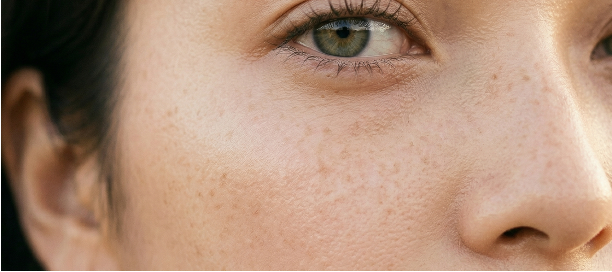
If Concern #2 is for deep, stubborn pigmentation that needs heavy-duty treatment, this section is for the earlier, milder end of the spectrum — light sun spots, freckles, slight unevenness in tone, or pigmentation you’ve just started to notice. Korean pharmacy skincare offers a gentler-strength option for these cases, and it’s arguably the most popular entry point for tourists exploring pharmacy brightening products.
💊 The Pharmacy Pick: Melatoning Cream
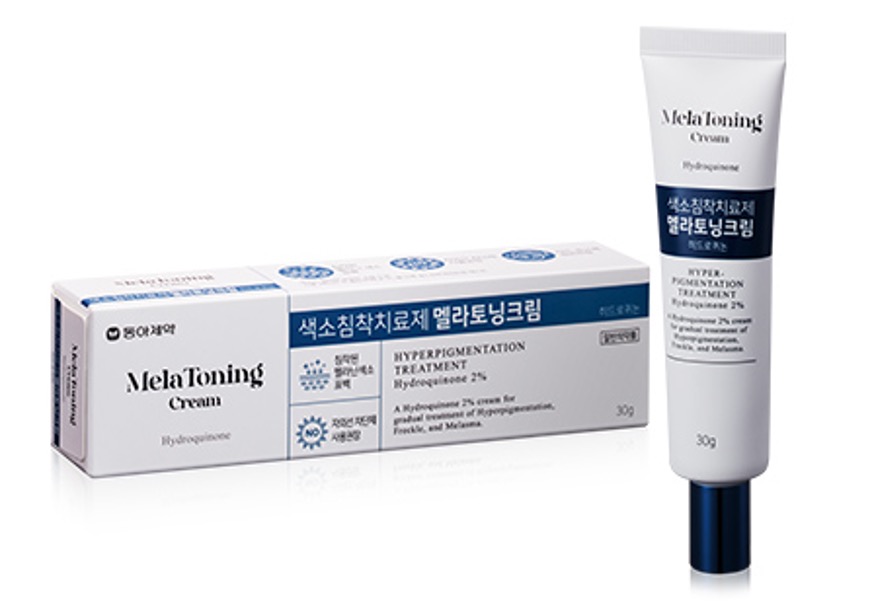
- Brand: Dong-A Pharmaceutical
- Key Active: Hydroquinone 2%
- What it does: Hydroquinone inhibits tyrosinase (the enzyme that triggers melanin production) and gradually fades already-deposited pigment. It’s a two-pronged approach: stop new melanin AND lighten existing spots.
- How to use: Apply a small amount to pigmented areas only, 1-2 times daily. Best used at night.
- Heads up: This one comes with non-negotiable rules. You MUST use sunscreen during the day — even minimal sun exposure can worsen pigmentation while using hydroquinone. Not for use during pregnancy, not for children under 12, and long-term continuous use requires pharmacist guidance due to potential side effects.
🧴 Prefer a Cosmetic? Try These Instead
Hydroquinone is a pharmaceutical ingredient — you won’t find it in cosmetics. But K-beauty has a whole arsenal of brightening actives that work through gentler mechanisms: niacinamide blocks melanin transfer, vitamin C provides antioxidant protection, and glutathione supports overall skin radiance.
1. [goodal] Green Tangerine Vita – C Dark Spot Care Serum α
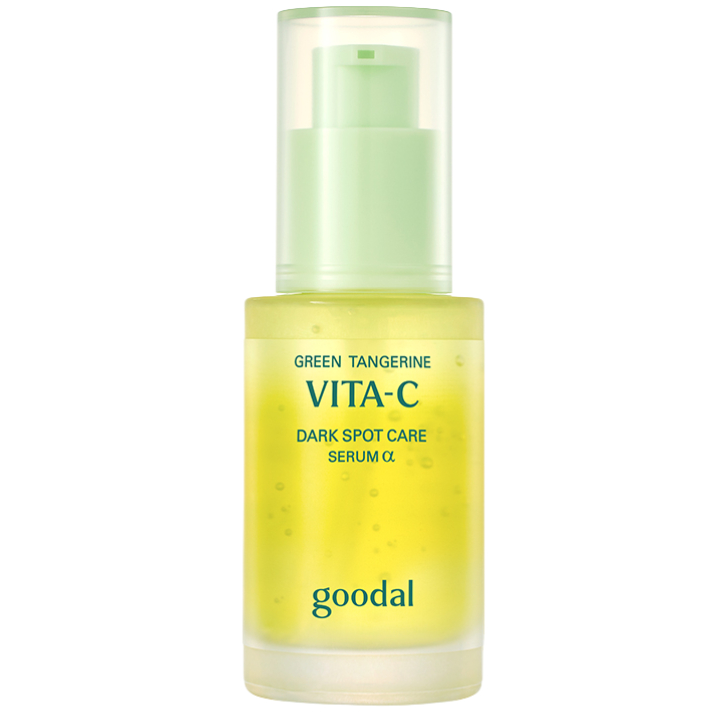
A K-beauty icon. Vitamin C + niacinamide work together to brighten and even out tone with consistent use.
2.[numbuzin] 5+ Vitamin Concentrated Serum

Glutathione + vitamin C create an antioxidant powerhouse. Think of it as an all-over glow treatment.
3. [Torriden] CELLMAZING Brightening Ampoule

Stabilized vitamin C derivative that’s gentle enough for sensitive skin but effective enough to notice a difference.
🧪 The Ingredient Take: Hydroquinone is the gold standard for pigmentation treatment — but it’s a medication with rules attached. Niacinamide, on the other hand, is one of the safest, most well-researched brightening ingredients in cosmetics, and you can use it daily without worry. For stubborn melasma, the pharmacy route (with pharmacist guidance) may be worth exploring. For general dullness and light sun spots, a good vitamin C or niacinamide serum will do the job beautifully.
Concern #4: Dull, Tired Skin That’s Lost Its Bounce
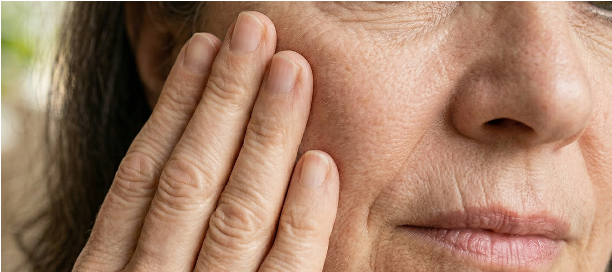
Loss of radiance, fine lines, and a general lack of firmness — these are the skin concerns driving one of the biggest trends in Korean pharmacy skincare right now.
💊 The Pharmacy Pick: Rejuvenex Cream
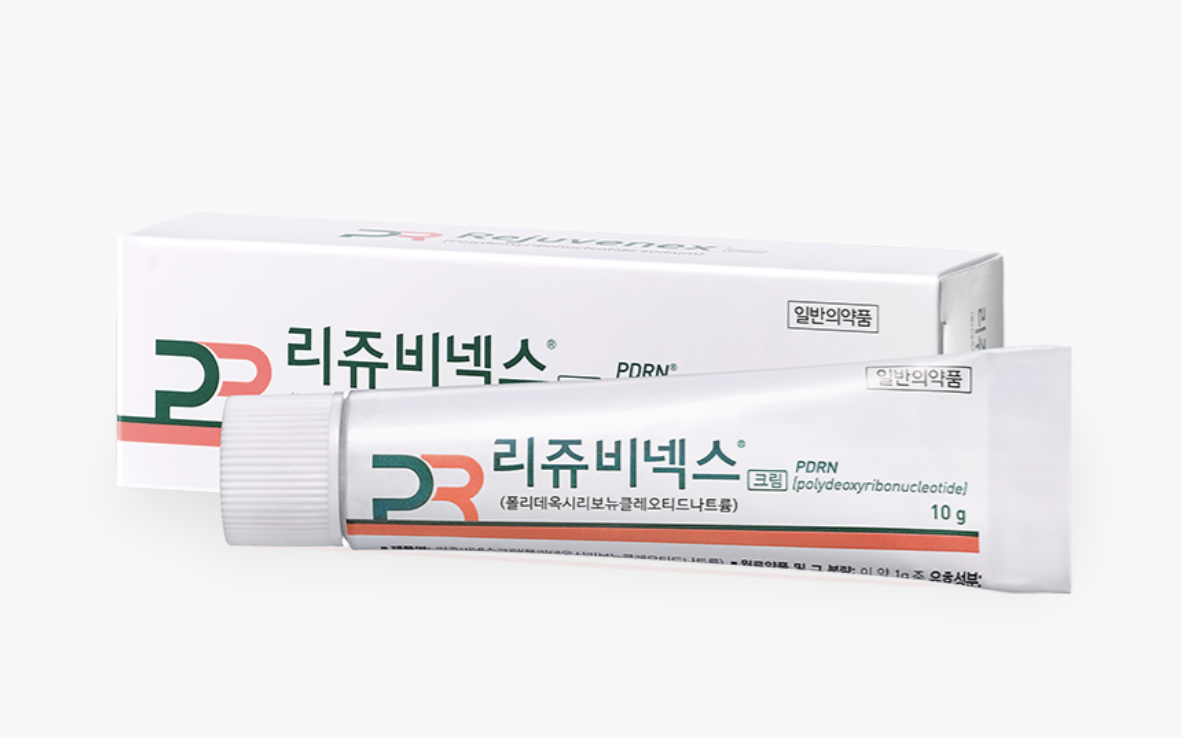
- Brand: Pharma Research (the same company behind the Rejuran skin booster injection)
- Key Active: PDRN (Polydeoxyribonucleotide) — DNA fragments derived from salmon
- What it does: PDRN binds to adenosine A2A receptors on cell surfaces, activating cell regeneration signals. Think of it as flipping the “repair mode” switch on your skin cells.
- How to use: Apply to skin as directed.
- Heads up: This is an OTC medication whose approved indication is for treating skin ulcers related to tissue malnutrition. Its popularity as a “glow cream” is driven by social media buzz, not clinical claims for anti-aging or brightening. Manage your expectations accordingly.
🧴 Prefer a Cosmetic? Try These Instead
Here’s the exciting part: PDRN is the trending ingredient in K-beauty right now, and there are excellent cosmetic options that incorporate it. Cosmetic PDRN works on the epidermis to support barrier regeneration and calm inflammation, and many brands pair it with complementary actives for targeted benefits.
1. [Anua] PDRN Hyaluronic Acid Capsule 100 Serum

PDRN meets hyaluronic acid for the regeneration + hydration combo your dehydrated skin is begging for.
2. [medicube] PDRN Pink Peptide Serum
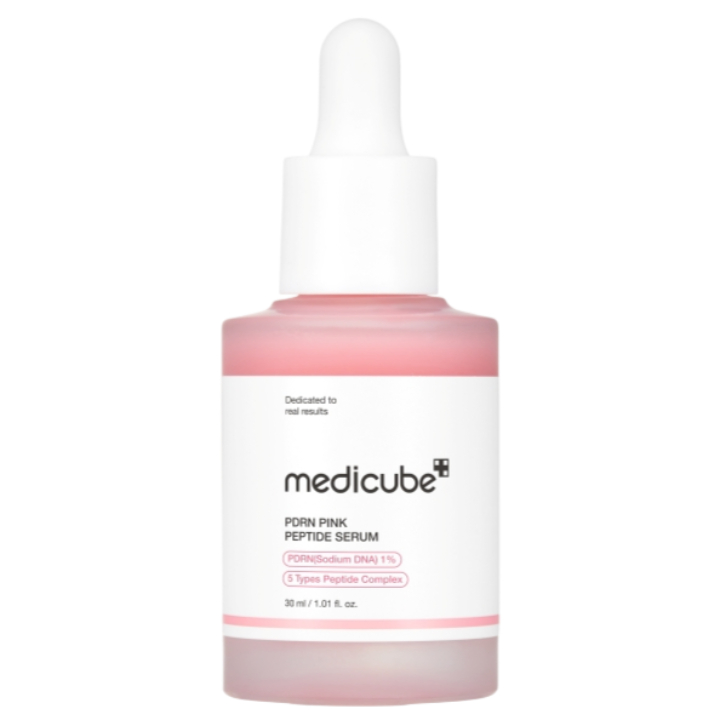
A 1% PDRN concentration plus peptides. This one’s all about firmness and bounce.
3. [VT COSMETICS] PDRN Essence 100

PDRN + glutathione for that lit-from-within radiance. Lightweight and layerable.
🧪 The Ingredient Take:
Rejuvenex Cream (medication) and PDRN cosmetics share the same hero ingredient, but they live in different regulatory worlds. The medication has stricter quality controls; the cosmetics are formulated for daily beauty routines with added actives for brightening, hydrating, and firming. If you love what PDRN does but want something you can seamlessly layer into your AM/PM routine, the cosmetic versions are your move.
Concern #5: Post-Procedure Skin or Irritation That Needs Serious Soothing
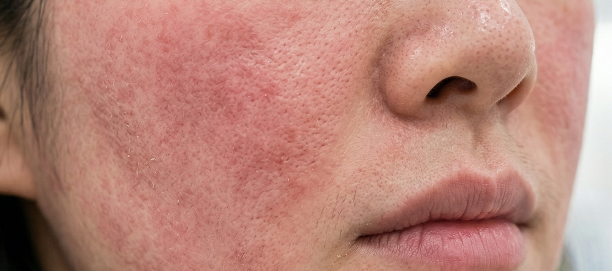
Whether you’ve just had a dermatological procedure, overdone it with active ingredients, or are simply dealing with persistent irritation — this pharmacy classic has been a Korean household staple for decades.
💊 The Pharmacy Pick: Madecassol Gel
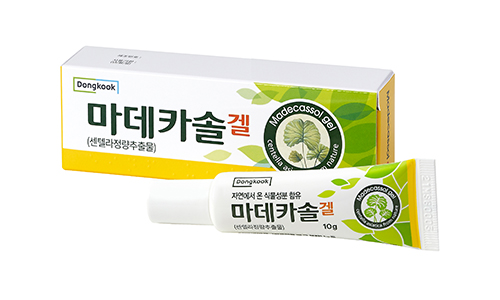
- Brand: Dongkook Pharmaceutical
- Key Active: Centella Asiatica Titrated Extract (TECA)
- What it does: TECA promotes collagen synthesis and supports wound healing. Available in ointment, gel, and powder forms for everything from minor cuts to burns.
- How to use: Apply to the affected area as directed.
- Heads up: If there’s active infection, treat that first before applying Madecassol. This is a wound-healing medication, not a daily moisturizer.
🧴 Prefer a Cosmetic? Try These Instead
This is the easiest pharmacy-to-cosmetic swap on the list — because cica (centella) is already one of K-beauty’s most beloved ingredients. In fact, Dongkook Pharmaceutical (the makers of Madecassol) created their own cosmetic brand, Centellian24, built on the exact same TECA extract. The ingredient pipeline from pharmacy to vanity is seamless here.
1. [Centellian24] The Madeca Cream

Same company, same core ingredient as Madecassol, but formulated as a daily cream. This is as close as a cosmetic gets to its pharmacy sibling.
2. [SKIN1004] Madagascar Centella Pro BIO-Cica Enrich Cream

Centella + niacinamide for soothing and a subtle brightening effect. A multi-tasker.
3. [Aestura] Theracne 365 Soothing Active Moisturizer

Cica + panthenol, specifically designed for post-acne and post-irritation recovery.
🧪 The Ingredient Take:
Madecassol = wound healing medication. Cica creams = daily soothing skincare. Same star ingredient, very different purposes. If your skin needs medical-level repair, the pharmacy product is the right call. For everyday redness, sensitivity, and barrier support, cica cosmetics are genuinely some of the best products K-beauty has ever produced.
Using OTC Medications as Beauty Products: What You Really Need to Know
Korean pharmacy skincare is blowing up — but with popularity comes misconceptions. Here’s a reality check before you turn your bathroom into a mini pharmacy.
🏥 These are treatments, not daily skincare. OTC medications are designed for specific symptoms on specific areas. They’re not meant to be applied all over your face like a moisturizer, no matter what that TikTok video showed.
🥵 More product ≠ better results. Especially with hydroquinone — overuse can actually worsen pigmentation or cause irritation. Follow the directions. They exist for a reason.
🤷♀️ Your skin is not that influencer’s skin. Social media reviews reflect one person’s experience with one person’s skin. Your skin type, existing conditions, and other products in your routine all affect how a medication will work for you.
🧑⚕️ Take advantage of the pharmacist. This is one of the best parts of Korean pharmacy skincare culture. Pharmacists in Korea are knowledgeable, approachable, and increasingly multilingual. Use them as a resource — it’s literally their job.
🧴 Know when cosmetics are enough. Mild concerns like occasional dullness, light texture, or basic hydration? K-beauty cosmetics are world-class at handling those. Save the pharmacy products for the concerns that genuinely need that extra level of intervention.
The Korean Pharmacy Skincare Cheat Sheet
| Your Skin Concern | Pharmacy Pick | Star Ingredient | Cosmetic Alternative Keywords |
|---|---|---|---|
| Active acne & breakouts | Azelia Cream | Azelaic Acid 20% | AHA, niacinamide, multi-acid |
| Acne scars & marks | Melanosa Cream / Domina Cream | Hydroquinone 4% | Vitamin C, niacinamide, tranexamic acid |
| Dark spots & melasma | Melatoning Cream | Hydroquinone 2% | Niacinamide, vitamin C, arbutin |
| Skin regeneration & glow | Rejuvenex Cream | PDRN | PDRN cosmetics, peptides |
| Post-procedure soothing | Madecassol Gel | Centella (TECA) — no antibiotics, no steroids | Cica / centella cosmetics |
The Bottom Line
Korean pharmacy skincare deserves the hype — but it deserves informed hype.
The products are genuinely impressive, backed by decades of pharmaceutical R&D, and often more affordable than you’d expect. But they’re medications, and getting the best results means understanding what they are, what they’re for, and when a beautifully formulated cosmetic might actually be the smarter choice for your skin.
The beauty of K-beauty has always been about having options — and with Korean pharmacy skincare now in the mix, you have more options than ever. But remember: the best starting point is almost always a well-chosen cosmetic. K-beauty cosmetics are formulated with the same hero ingredients found in pharmacy products — centella, niacinamide, PDRN, vitamin C — at concentrations designed for safe, everyday use. For many skin concerns, that’s more than enough.
Start by finding the right cosmetic for your skin concern and ingredients that work for you. If that’s not cutting it, then the pharmacy option is always there as your next step — with a pharmacist to guide you.
Not sure which cosmetic to start with? Hwahae makes it easy to search by ingredient, skin type, and concern — with real reviews from millions of users.
*This content is for informational purposes only and does not constitute medical advice. Always consult a pharmacist or healthcare professional before purchasing or using any OTC medication.