
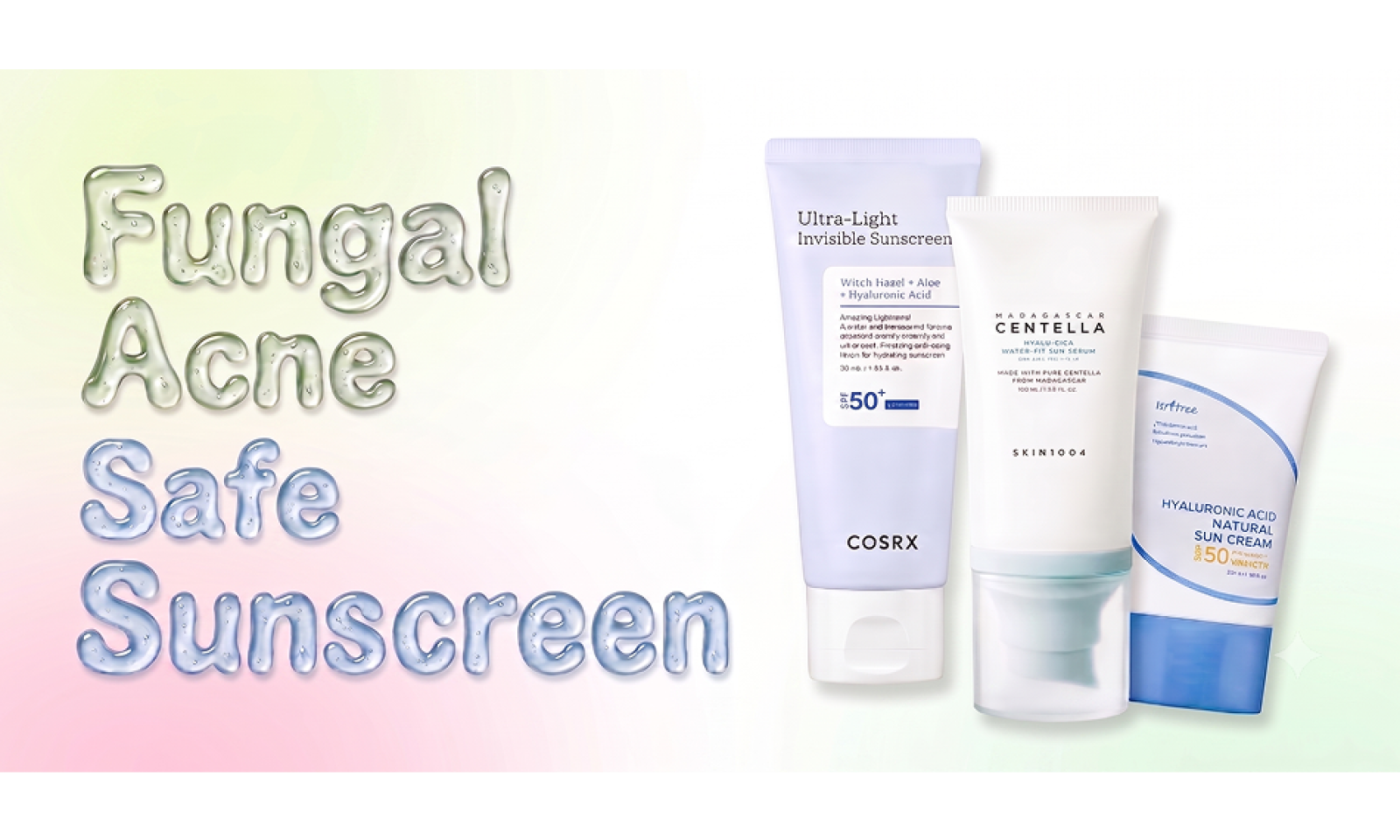
Finding a fungal acne safe Korean sunscreen is the hardest part of building a fungal acne safe routine — it’s usually the step where everything falls apart. Rich textures, heavy emollients, and the “-ate” esters that feed Malassezia show up in formula after formula — yet daily SPF is non-negotiable for protecting your barrier and preventing the dark marks a breakout leaves behind. So we did the tedious part for you: we read the full ingredient list of the most-loved Korean SPFs and sorted the genuinely clean ones by exactly how clean they are.
The result is two tiers. The Purest Pick passes every check with zero flagged ingredients. The Everyday-Safe Picks are clean in every way that matters — no oils, no fragrance, no fermented ingredients — with one caveat we’ll explain honestly below. Choose based on how sensitive your skin is and the finish you like.
Why Sunscreen Is the Hardest Step for Fungal Acne
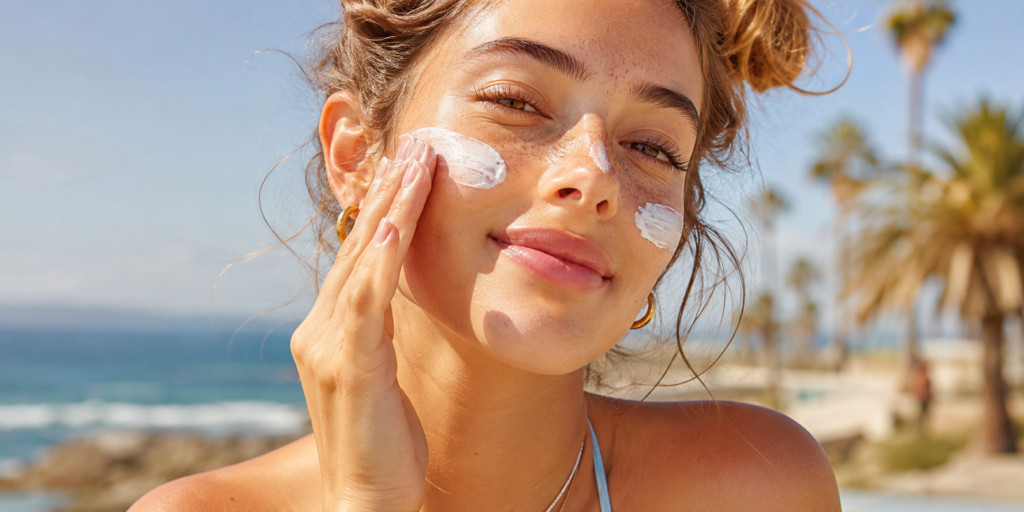
Sunscreens have a hard job: they need to spread a stable, water-resistant film across your skin, and that usually calls for emollients and emulsifiers — the exact ingredient families that can feed Malassezia. That’s why so many otherwise-lovely SPFs quietly break out fungal-acne-prone skin. It doesn’t mean you skip sunscreen; it means you choose it more carefully than any other step.
One practical note for US readers: Korean sunscreens often use next-generation UV filters (like Ethylhexyl Triazone or DHHB) that aren’t yet FDA-approved for sale as over-the-counter sunscreens in the States. That doesn’t make them unsafe — they’re widely used worldwide — but it does mean you’ll usually buy them as imported cosmetics through K-beauty retailers (Amazon, YesStyle, Olive Young, and similar) rather than off a drugstore shelf.
One important caveat up front: this guide is educational, not a diagnosis. Several conditions — including contact dermatitis and rosacea — can mimic fungal acne, so a board-certified dermatologist is the only one who can confirm it (sometimes with a quick in-office test). If your skin isn’t improving, please see one. Everything below assumes you’re building a gentle, yeast-aware routine alongside professional guidance.
What Makes a Sunscreen Fungal Acne Safe (and the Ingredient That Sets the Tiers)
The core rule is the same as the rest of a fungal acne safe routine: Malassezia feeds on fatty acids in the C11–C24 range, so you want to avoid most plant oils, free fatty acids, many “-ate” esters, polysorbates, and high-concentration fermented ingredients. Screen a sunscreen against that list and most contenders drop out fast.
But there’s one ingredient that lands in a gray zone — and it’s the reason we split the picks into tiers: Polyglyceryl-3 Methylglucose Distearate (and its close relatives). It’s a gentle emulsifier built on stearic acid, a C18 fatty acid inside the range Malassezia can theoretically use, so strict ingredient analysis flags it. In practice it’s a large, bound emulsifier — not a free fatty acid — used at low levels, and it appears in the base of almost every Korean sunscreen. Many fungal-acne-prone people use it with zero issues. Whether you avoid it entirely or accept it is a personal call, and that’s exactly what our two tiers let you do.
How We Vetted These — Based on Hwahae Ingredient Analysis
Every pick below was checked against its complete INCI list using Hwahae’s ingredient analysis — not brand claims, not marketing copy. We looked for oils, free fatty acids, triggering esters, polysorbates, and fermented ingredients, then sorted what remained by how strictly clean it is. Two tiers came out of it, and both are genuinely usable choices.
The Purest Pick — Zero Flagged Ingredients
COSRX Ultra-Light Invisible Sunscreen SPF 50 PA++++
![Ultra-Light Invisible Sunscreen [SPF50+/PA++++]](https://img.hwahae.co.kr/products/2103004/2103004_20240705110743.jpg)
This is the one sunscreen on our list with nothing flagged at all — no oils, no fragrance, no triggering esters, not even the common emulsifier from the section above. Its short ingredient list leans on niacinamide, aloe leaf water, and witch hazel, and the finish lives up to the name: sheer, weightless, and truly invisible with no white cast. If your skin is very reactive or you simply want the strictest possible option, start here. The light, slightly dry-touch finish makes it a natural fit for oily and combination skin and an easy layer under makeup.
It’s a chemical sunscreen, so give it a few minutes to set before layering, and reapply through the day as with any SPF. Widely available in the US through K-beauty retailers.
Everyday-Safe Picks — Clean but for One Common Emulsifier
Both picks below are free of oils, fragrance, and fermented ingredients. The only thing our analysis flags in each is a stearate-based emulsifier from the section above — the one that’s in nearly every Korean sunscreen and that most fungal-acne-prone people tolerate well. If that’s an acceptable trade for you (it is for most), these two open up finishes and textures the Purest Pick doesn’t cover.
| Tier | Product | Filter type | Size | US Price (approx.) |
|---|---|---|---|---|
| The Purest Pick | COSRX Ultra-Light Invisible Sunscreen SPF 50 PA++++ | Chemical | 50 ml | ~$16 |
| Everyday-Safe | SKIN1004 Madagascar Centella Hyalu-Cica Water-Fit Sun Serum SPF50+ | Chemical | 50 ml | ~$20–28 |
| Everyday-Safe | Isntree Hyaluronic Acid Natural Sun Cream SPF50+ | Mineral | 50 ml | ~$20 |
SKIN1004 Madagascar Centella Hyalu-Cica Water-Fit Sun Serum SPF50+ PA++++
![MADAGASCAR CENTELLA HYALU-CICA WATER-FIT SUN SERUM [SPF50+/PA++++]](https://img.hwahae.co.kr/products/2200924/2200924_20260417110443.jpg)
If you want a sunscreen that feels like a hydrating serum, this is it. The watery, weightless texture sinks in fast, leaves a soft dewy glow with no white cast, and layers cleanly under makeup without pilling. It’s built around centella (cica) and hyaluronic acid to soothe and hydrate, with antioxidant plant extracts rounding it out — and it’s fragrance-free, which reactive skin appreciates. Best for normal, dry, or sensitive skin, and a favorite for anyone chasing a healthy glow rather than a matte finish.
Isntree Hyaluronic Acid Natural Sun Cream SPF50+ PA++++
![HYALURONIC ACID NATURAL SUN CREAM [SPF50+/PA++++]](https://img.hwahae.co.kr/products/2129911/2129911_20250120155727.jpg)
Prefer a mineral filter? This zinc-oxide sunscreen is the cleanest mineral option we found — no oils, no fragrance, no common allergens — with hyaluronic acid, niacinamide, and panthenol for hydration and barrier support. It’s a lovely choice for sensitive, redness-prone, or reactive skin that does better with a physical filter. As with most mineral formulas, blend it in well and expect a slightly more present finish than the two chemical picks; a thin, even layer keeps any cast minimal.
How Strict Do You Need to Be? (Choosing and Using Your SPF)
Here’s the honest answer: the C11–C24 rule comes largely from lab studies, and real skin is more forgiving than a petri dish. A low-level, bound emulsifier near the middle of an ingredient list behaves very differently from a spoonful of oil. So match the tier to your skin: if you’re mid-flare or extremely reactive, the Purest Pick removes the guesswork; if your skin is fairly stable, the Everyday-Safe picks are excellent and give you more finishes to choose from.
Whichever you pick, the fundamentals don’t change: patch test any new SPF for a few days, apply enough (about two finger-lengths for the face), let a chemical formula set before makeup, and reapply every two hours of real sun exposure. Consistency matters more than chasing a “perfect” formula.
FAQ
Q. What’s the best fungal acne safe Korean sunscreen?
For the strictest standard, the COSRX Ultra-Light Invisible Sunscreen is our Purest Pick — it’s the one formula on this list with zero flagged ingredients. If your skin tolerates the common stearate emulsifier (most do), the SKIN1004 serum and the Isntree mineral cream are excellent Everyday-Safe options with different finishes.
Q. Where can I buy Korean sunscreen in the US?
Because many Korean SPF filters aren’t FDA-approved for OTC sale, US shoppers typically buy these as imported cosmetics through K-beauty retailers like Amazon, YesStyle, and Olive Young rather than at a local drugstore. Availability and pricing can shift, so it’s worth comparing a couple of sellers.
Q. Is mineral sunscreen better for fungal acne?
Not inherently — both chemical and mineral formulas can be fungal acne safe or not, depending entirely on the full ingredient list. Mineral filters (like zinc oxide) can be a nice choice for sensitive or redness-prone skin, which is why our mineral pick is the Isntree cream. Read the INCI, not the “mineral” label.
Q. Is a sunscreen with Polyglyceryl-3 Methylglucose Distearate still okay?
For most fungal-acne-prone people, yes. It’s a bound emulsifier used at low levels, not a free fatty acid, and it’s present in the base of nearly every Korean sunscreen. Strict ingredient analysis flags it because it’s built on a C18 fatty acid, so if you’re mid-breakout or want zero uncertainty, choose the Purest Pick. Otherwise, patch test and let your skin be the judge.
You don’t need a dozen options — you need the right one for your skin. If you want the strictest, no-questions formula, reach for the Purest Pick (COSRX Ultra-Light Invisible). If your skin is stable and you want a dewy serum or a gentle mineral finish, the Everyday-Safe picks (SKIN1004, Isntree) deliver without the oils, fragrance, or fermented triggers that derail most SPFs. Whatever you choose, wear it every day — and pair it with the rest of your → Fungal Acne Safe Korean Skincare routine.